
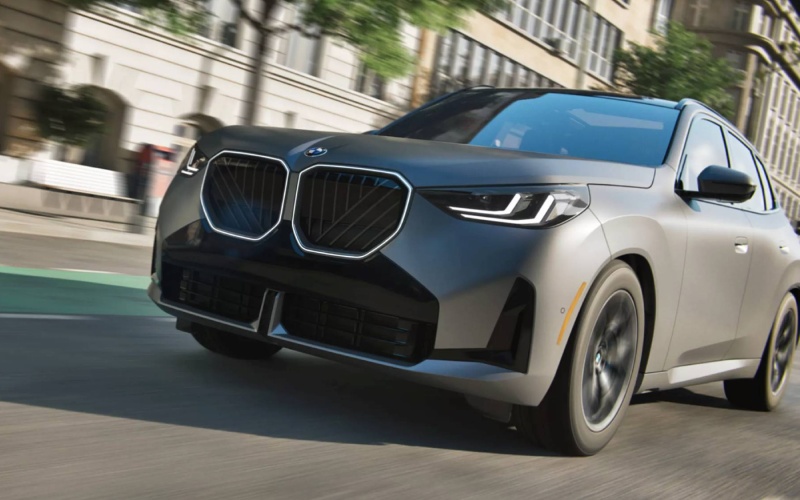
Patrick BMW - Which luxury compact SUV has the smartest everyday tech — 2026 BMW X3 or 2026 Audi Q5 for drivers around St. Charles, IL?
When shoppers ask which luxury compact SUV has the smarter everyday technology — the BMW X3 or the Audi Q5 — they are really asking which one feels easier, calmer, and more capable in the moments that matter. On paper, both models bring impressive hardware. The BMW X3 showcases a 14.9" BMW Curved Display, the BMW Interaction Bar, a natural-voice BMW Intelligent Personal Assistant, and available Digital Key Plus so your phone can be your key. The Audi Q5 counters with a 14.5" MMI touch display, an 11.9" virtual cockpit, and available technology like a head-up display and a passenger screen. Beyond features, though, is the question of integration — how quickly you can get from intent to action with minimal distraction while navigating family life near St. Charles, IL.
That’s where the BMW approach stands out. The Curved Display places maps, media, and menus where your eyes expect them, and the Interaction Bar makes climate and core functions immediate with a satisfying tactile response. The voice assistant responds naturally, so you can say, “I’m cold,” or “Find the nearest coffee,” without memorizing commands. The system learns preferences over time and respects your context. Audi’s tech is sharp, and the optional passenger display is an intriguing way for co-pilots to manage entertainment or input destinations. But for the driver, the BMW’s ergonomics reduce steps and distractions, which matters more than screen inches on a busy school-morning loop.
How do the SUVs handle the daily routine?
It’s not just about screen clarity — it’s how that tech supports the commute. The X3 pairs its interface with dynamics that inspire trust. Standard xDrive is quick to find traction in rain-slicked roundabouts, and available Dynamic Damper Control adapts to rough patches and fresh pavement alike. Pair that with optional Variable Sport Steering, and you get a compact SUV that threads confidently through tight lots and eases into highway lanes with predictable control. The Q5 delivers well-sorted ride quality too, and the available adaptive air suspension adds ride-height adjustability. If your daily life includes frequent curb cuts, speed humps, and garage angles, that Audi option has appeal. Still, the BMW’s across-the-board balance — from low-speed finesse to highway stability — makes everyday errands feel smoother and less effortful.
Families also ask about convenience. The X3’s Digital Key Plus means no more fumbling for a fob during school pickup or while loading groceries. And because BMW’s voice assistant handles climate tweaks and navigation naturally, you stay focused on the road. Audi’s MMI is intuitive, and its optional head-up display is a nice driver aid. If you split tech duties with a co-pilot, the Audi’s passenger display is a neat way to share the workload. Yet when you are solo — as many parents are for most trips — the BMW keeps more tasks within a single glance and a single command.
Which one feels more future-ready?
Both vehicles are intelligent and connected, but BMW leans into an ecosystem that feels cohesive. With the My BMW App, you can manage vehicle status, plan service, and set up Digital Key Plus. Optional BMW Digital Premium adds in-car streaming and apps right on the 14.9" display for downtime moments. Audi’s MMI and myAudi services are strong — and the brand continues to expand connected features — but the X3’s overarching theme is simplicity at the speed of life. The fewer steps between you and the function you need, the more future-ready it feels, because it scales to your day without extra thought.
Driver assistance: helpful when you need it
The BMW X3 includes a comprehensive set of standard driver aids such as Active Blind Spot Detection, Lane Departure Warning, and Frontal Collision Warning with City Collision Mitigation. Layer in Active Driving Assistant and the X3 supports you unobtrusively when traffic bunches up or drivers ahead do the unexpected. The Q5 offers a comparable array of systems, with available adaptive cruise assist and lane guidance adding long-haul ease. If you test both, pay attention to how quickly you can set, adjust, and cancel assistance features without digging through menus. Most shoppers tell us the BMW’s interface and voice control make small adjustments simpler in motion.
For many households near St. Charles, IL, the verdict comes down to how much mental bandwidth an SUV frees up. A tech suite that anticipates your next step is worth more than a spec sheet that dazzles. The BMW’s combination of natural-voice control, an ergonomically ideal display, and tactile, glanceable climate controls make it feel one step ahead of your day — and that sums up “smart” better than any single feature callout.
Test-drive checklist for real-world clarity
Side-by-side drives are enlightening if you focus on specific, common tasks rather than a quick loop around the block. Try this simple checklist to reveal meaningful differences.
- Pair your phone and set a destination using only voice on both vehicles.
- Adjust cabin temperature and fan speed without taking your eyes off the road.
- Perform a quick three-point turn in a tight lot and notice steering effort and camera clarity.
- Merge onto a highway and evaluate accelerator response and transmission smoothness.
- Toggle driver assistance features while cruising to gauge interface simplicity.
If you keep the focus on real tasks, you will quickly sense which SUV supports your style with fewer steps and less distraction.
Feature comparison highlights
- Driver-first interface: The BMW Curved Display and Interaction Bar put core functions exactly where your hand and eyes expect them.
- Natural-voice control: BMW Intelligent Personal Assistant handles plain-language requests for navigation, climate, and media.
- Convenience built in: Digital Key Plus streamlines your day by turning a compatible smartphone into your key.
- Composed dynamics: xDrive, available Dynamic Damper Control, and Variable Sport Steering help the X3 feel settled and precise.
- Audi technology strengths: Q5’s available head-up display and passenger screen add interesting options for shared control.
At the end of the day, both SUVs are excellent. The difference is how they help you think less and enjoy more behind the wheel. That’s where the BMW X3 remains a standout.
Frequently Asked Questions:
Which SUV has the more intuitive infotainment for daily driving?
Both systems are modern and responsive. The BMW X3’s 14.9" Curved Display and Interaction Bar make common tasks simpler with fewer steps, while the voice assistant understands natural requests. Audi’s MMI is crisp and capable, and the available passenger display is a unique plus for co-pilots. For drivers who handle most inputs themselves, the BMW tends to feel more intuitive.
How do these SUVs differ in driver assistance usability?
BMW equips the X3 with a robust standard suite and an interface that makes small adjustments easy. The Audi Q5’s adaptive cruise assist and lane guidance are excellent options. Usability comes down to workflow — many drivers report that BMW’s menu structure and voice control reduce distraction.
Which is better for a mix of errands and highway trips?
Both can handle it well. The BMW’s balanced ride-and-handling tune, plus simple, glanceable controls, make it especially accommodating for multi-stop days and weekend drives. Audi’s available adaptive air suspension offers added ride-height versatility. A test drive will reveal which suits your routine best.
Patrick BMW is serving Mount Prospect, Rolling Meadows, and St. Charles with expert guidance and an easy, transparent experience. If your top priority is technology that disappears into the background and dynamics that feel calm yet ready, the X3 deserves to be first on your list.
Request more 2026 BMW X3 information
Categories:
BMW X3